EN
Recycled Fiber Manufacturing Process Using PET Materials
Turning used PET bottles into recycled fiber is not a single machine operation. It is a linked material-preparation, melt-processing, and fiber-forming workflow. From a fiber-process technical perspective, the central question is not simply whether a line can make fiber; it is whether the incoming PET condition, process sequence, and target fiber specification are aligned.
A recycled PET fiber project therefore begins with a clear end-use brief: staple length, fineness, color tolerance, intended downstream process, and the variation the production team can manage. Those requirements shape the checks needed at every stage of the fiber production process.
What PET Feedstock Must Be Prepared Before Fiber Production?
PET, or polyethylene terephthalate, is widely used for beverage and consumer-product containers. In a bottle-to-fiber route, post-consumer bottles are collected, sorted, and prepared so that the material entering the thermal process is as consistent as the project requires. Feedstock variation deserves its own evaluation path rather than being treated as a minor upstream issue.
Incoming material may differ in polymer type, color, label and cap residue, moisture, dirt, and prior use. Sorting separates PET from non-PET materials and can also separate color streams where the desired fiber appearance makes that useful. The goal is not to claim that all incoming bottles are identical; it is to define an acceptable material window and verify how the line will handle deviations.
Bottle recycling normally continues with size reduction into flake. Industry recycling guidance describes a general sequence of grinding, washing, rinsing, drying, melting, and filtering. The precise arrangement and operating conditions should be confirmed for the planned feedstock and fiber grade.
The PET Bottle-to-Recycled Fiber Process, Step by Step
- Collection and receiving. Bales or loose bottles are checked against the agreed input criteria. A receiving plan can record visible contamination, color mix, and packaging condition before the material enters the line.
- Sorting and separation. Mechanical and optical sorting systems may separate PET from other plastics, metals, paper, caps, labels, and nonconforming items. This step sets the quality burden for downstream washing and melt filtration.
- Size reduction and washing. Bottles are converted to flake, then washed to remove surface dirt, labels, adhesives, and residues. Rinsing follows so that the next operation receives cleaned material rather than wash chemistry or loose contaminants.
- Drying and flake control. Drying matters because PET is sensitive to moisture during melt processing. Teams should define how moisture, particle contamination, and flake consistency will be checked before the material moves forward.
- Melt preparation and filtration. The dry flake is melted and passed through filtration to remove remaining solids. Depending on the selected route, the melt may be formed into intermediate pellets or sent toward spinning. The choice should be evaluated against material condition, operating strategy, and the required fiber characteristics.
- Spinning. Prepared PET melt is metered to a spinneret, where it becomes continuous filaments. Cooling and controlled handling begin establishing the form of the future recycled fiber.
- Drawing, crimping, and heat treatment. For staple-fiber production, filaments are commonly drawn to orient the polymer, then crimped and thermally treated as appropriate for the chosen process route. These stages should be viewed as connected decisions, not isolated equipment names.
- Cutting, baling, and release checks. The finished tow can be cut to the intended staple length, packaged, and reviewed against the project’s agreed test plan. Product release criteria should be defined before production rather than after a sample is made.
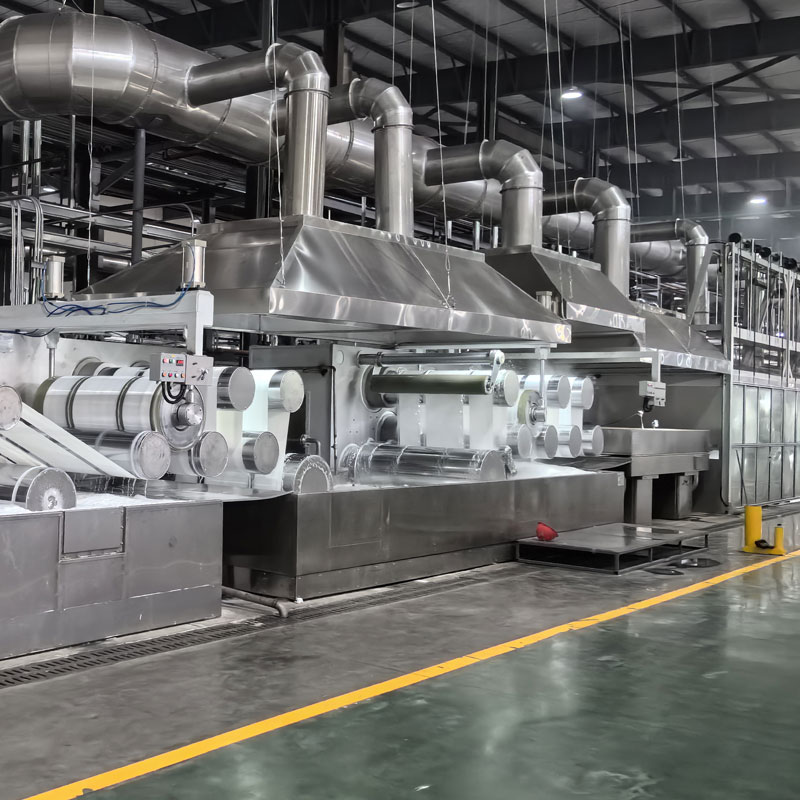 Illustrative material flow from prepared PET feedstock through melt processing and fiber formation.
Where Polyester Regeneration Fits in the Workflow
Polyester regeneration is often used to describe converting recovered polyester material into a usable new form. In this article, it refers to the physical recycling path from prepared PET to melt and then fiber. It should not be confused with a blanket claim that every recycled route produces the same molecular condition, color, or application suitability.
For a technical project, the useful discussion is a decision sequence: What feedstock is available? What contamination controls are needed? What fiber form is required? Which process handoffs must be validated? This approach helps engineering, quality, and procurement teams compare scope on the same basis.
Critical Control Points for Recycled PET Fiber
| Process area | Why it matters | Question to define |
|---|---|---|
| Incoming bottles and flake | Material variation can carry into later stages. | What feedstock acceptance criteria and sorting records are required? |
| Washing and drying | Residues and moisture affect preparation for melt processing. | Which cleanliness and moisture checks are appropriate for the target fiber? |
| Melt filtration | Remaining particles can influence downstream continuity and appearance. | What filtration approach matches the actual flake condition? |
| Spinning and drawing | Fiber geometry and handling are established through linked operations. | Which fiber attributes need confirmation through trials? |
| Finished-fiber evaluation | End-use requirements determine what data is meaningful. | Which test methods, sampling plan, and acceptance limits apply? |
Plan the Line Around the Target Fiber, Not Only Capacity
Capacity is an important planning number, but it does not answer every process and handoff question. A throughput target does not replace review of utilities, material handling, quality checkpoints, controls, maintenance access, or handoffs between recycling and fiber-forming systems.
For a recycled bottle-to-fiber project, a useful early checklist includes the PET source, contamination assumptions, target fiber range, planned trial method, site utilities, and responsibilities at each subsystem boundary. Soft Gem’s stated project-planning and handoff-review context can be a starting point for organizing those questions, subject to project-specific technical confirmation.
Why Verification Matters
Environmental messaging should remain connected to evidence. The U.S. EPA reported that PET bottles and jars had a 29.1% recycling rate in 2018; that is historical U.S. context, not a global performance figure for an individual plant. Likewise, when material is intended for food-contact use, suitability is a separate, process-specific regulatory question involving source controls and contamination evaluation.
For ordinary industrial planning, the same discipline is valuable: state what has been measured, identify the conditions of the measurement, and distinguish a design target from a verified output. That makes discussions of recycled PET fiber more useful to the people who must operate, qualify, or purchase the line.
Conclusion
A reliable recycled fiber manufacturing process links PET collection and preparation with controlled melt processing and fiber finishing. The practical approach is to define the target fiber first, treat feedstock as a design input, and set validation points from bottle recycling through final release. With those decisions documented, teams can evaluate the fiber production process on evidence and scope rather than assumptions.




 Hot News