EN
Fibre Making Machine: Complete Buying Guide for Manufacturers
Buying a fibre making machine is rarely a matter of choosing one model from a catalogue. The phrase can describe a complete staple-fibre line, a feedstock-preparation section, an opening or carding unit, or a specialised downstream machine. That ambiguity is where expensive misunderstandings begin. For an industrial buyer, the useful question is how the proposed scope supports the intended fibre, site conditions, operating team, and verification plan—not simply which quotation has the shortest equipment list.
This guide uses a procurement-evaluator lens for comparing fibre production equipment. It is designed for manufacturers who need to turn a broad equipment enquiry into a reviewable technical and commercial decision.
Start by defining what “fibre making” means for your project
Search results for a fibre making machine often mix full production lines with opening, carding, recycling, filling-fibre, and pilot equipment. Before contacting suppliers, state the process boundary in one page. Identify the feedstock, target fibre format, intended end use, planned operating mode, and the point where your responsibility begins and ends.
For example, a project based on polymer or recycled material may need discussions around material receipt, preparation, conversion, forming, drawing or finishing, handling, controls, utilities, and quality checks. A standalone textile machinery purchase may instead connect to an existing upstream and downstream system. These are not interchangeable buying cases.
- Input: What material condition, contamination range, moisture condition, or blend requirements must be confirmed?
- Output: Which fibre type, specification range, packaging form, and intended application define success?
- Boundary: Which material-handling, utility, control, safety, and commissioning handoffs are inside the supplier scope?
- Evidence: What documents, trials, inspection points, and acceptance criteria will the project team use?
At first this looks like a machine-selection issue; more precisely, it is a process-and-handoff selection issue. A capacity figure alone does not show whether materials, utilities, handling, controls, people, and commissioning arrangements are ready to support it.
Build requirements before comparing a fibre making machine
A disciplined requirements brief allows engineering, production, quality, procurement, and management teams to compare the same things. Start with the product requirement rather than a preferred machine layout. Record what is known, what remains to be validated, and who owns each open decision.
1. Feedstock and product requirements
Describe the intended raw material and its expected condition. Where recycled inputs are involved, treat input variability as a design input, not a background assumption. Then define the target fibre application and the characteristics that need project-specific review. Avoid turning a target characteristic into a promised outcome before the process, test method, and operating conditions have been confirmed.
2. Capacity, flexibility, and changeover expectations
Ask whether the proposed fibre making machine is being evaluated for a narrow production objective, a future product range, development work, or a mixture of these. Flexibility can add handoffs, controls, operating procedures, and validation work. That does not make it unsuitable; it means the buyer should compare flexibility against the complexity the plant can reasonably manage.
3. Site and utility connections
Layout, electrical supply, thermal systems, water, compressed air, ventilation, material movement, and access for maintenance all require site confirmation. A supplier can explain assumed handoffs, but the final arrangement should be checked against the actual building, local rules, workflow, and installation plan.
Compare proposals by scope, not price alone
When several offers describe a fibre making machine, make a scope matrix before attempting a price comparison. The initial quotation is only one input; integration, operation, maintenance, validation, and handover also affect the decision. Place each proposal against the same headings and ask suppliers to identify exclusions plainly.
| Comparison area | Questions to ask | Evidence to request |
|---|---|---|
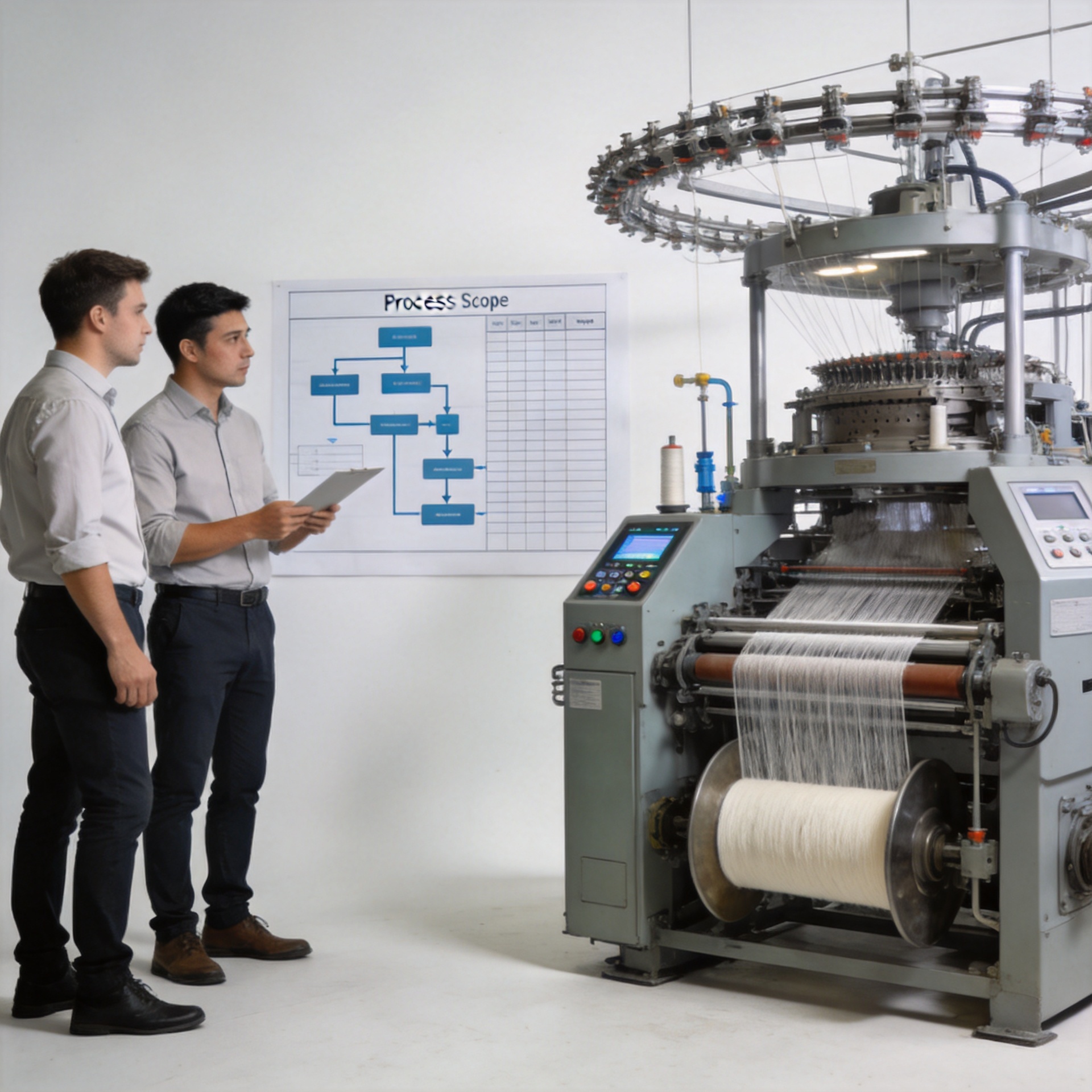
| Process scope | Which stages and handoffs are included? What remains with the buyer or a third party? | Process-flow diagram, scope boundary list, responsibility matrix |
| Equipment configuration | How does each module relate to the stated product and feedstock requirements? | Configuration description, assumptions list, proposed layout inputs |
| Controls and data | What operating visibility, alarms, records, and integration points are proposed? | Controls architecture outline and handoff schedule |
| Quality planning | Which checks belong to commissioning, routine operation, or final acceptance? | Inspection and test plan, proposed records, acceptance discussion |
| Handover and support | Which documents, training topics, spares discussions, and service boundaries are included? | Documentation index, handover plan, support-scope description |
This approach makes manufacturing solutions comparable even when suppliers organise their proposals differently. It also surfaces coordination work that a headline price can hide.
Use safety and quality questions as evaluation tools
Machinery safety should be a documented project discussion, not a generic line in a proposal. ISO 12100:2010 sets out principles and a methodology for machinery risk assessment and risk reduction, including documentation and verification of that process. Ask how the applicable risk assessment, safeguarding approach, operating instructions, and local regulatory responsibilities will be addressed for the actual installation.
For quality management, ISO describes ISO 9001 as a framework involving documented information, monitoring and measurement, defined responsibilities, and continual improvement. This does not prove that a particular supplier or project is certified. It does offer useful questions: how will requirements be controlled, how will deviations be recorded, and how will acceptance evidence be organised?
Assess the supplier’s project approach
A fibre making machine may be part of a larger capital project, so evaluate the supplier’s approach to clarification as well as the equipment list. A productive technical discussion should make assumptions visible and identify information still needed from the buyer. Ask how the supplier plans to handle process-package discussion, engineering handoffs, equipment scope clarification, controls coordination, and handover documentation.
Suzhou Soft Gem Intelligent Equipment Co., Ltd. presents its work around overall fibre-material plant planning, process packages, engineering design, complete equipment manufacturing, digital information integration, and lifecycle service. For a specific project, buyers should request the relevant scope description and verified technical documentation rather than inferring a capability, output, delivery period, certification, or project result from a general company profile.
Prepare an RFQ that produces useful answers
A vague RFQ invites vague proposals. To evaluate a fibre making machine fairly, share the available process requirements and ask every supplier to respond against the same checklist:
- State the intended feedstock, target output, capacity basis, and known operating constraints.
- Request a clear inclusion-and-exclusion schedule for the proposed industrial machine and connected systems.
- Ask for utility, layout, foundation, material-flow, and control-connection requirements.
- Require assumptions, open technical questions, and buyer-supplied inputs to be labelled.
- Agree the documents, inspection stages, training topics, commissioning responsibilities, and acceptance criteria needed before contract finalisation.
That said, the next question is not which option sounds more advanced, but which one fits the stated production objective and can be validated through a shared project plan.
Final decision checklist
Before selecting a fibre making machine, confirm that the team can explain the process boundary, the required output, the comparable scope of each proposal, the site connections, the safety and quality evidence requested, and the responsibilities through commissioning and handover. A buying decision becomes clearer when the quotation, technical assumptions, and acceptance plan tell the same story.
For manufacturers comparing fibre production equipment, the practical next step is to turn the checklist above into a project-specific requirements sheet. It gives suppliers a common basis for response and gives the buyer a defensible way to evaluate textile machinery, integration needs, and long-term operating responsibilities.



 Hot News