EN
How Polyester Fiber Properties Are Controlled During Manufacturing
When teams discuss making polyester fiber, they often focus on one machine or one setpoint. In practice, finished performance comes from a linked process: polymer condition, melt handling, filament formation, cooling, drawing, thermal treatment, and final verification. A fiber-process technical advisor starts with the intended end use and works backward. The question is not simply whether a line can run, but whether its controlled process window can repeatedly deliver the agreed fiber quality control targets.
That systems view matters because polyester characteristics such as tenacity, elongation, shrinkage, crimp response, fineness, and appearance are connected. A change that improves one result may affect another. For teams making polyester fiber, the practical goal is therefore traceability: define the target, identify the production parameters that can influence it, measure the outcome, and use the evidence to refine the window.
Start With the Property Profile, Not a Generic Recipe
Before making polyester fiber, define what the fiber must do in its next process or final application. A staple intended for spinning, nonwovens, filling, or blending may require a different balance of fineness, cut length, crimp, strength, elongation, and thermal behavior. The same applies to recycled and virgin feedstocks: the acceptable input range should be reviewed against the required output rather than assumed to be interchangeable.
A useful specification sheet separates measurable requirements from preferences. It may list linear density, length, moisture, tensile behavior, crimp-related criteria, color or contamination limits, and the test methods used for release. This creates a common reference for operations, laboratory staff, and customers. It also prevents a familiar planning error: treating a production line quotation or a single laboratory value as if it represented the whole quality outcome.
Control the Polymer Before It Reaches the Spinneret
The first control point in making polyester fiber is the polymer condition. Polyester is sensitive to moisture during thermal processing, so material preparation, drying consistency, residence time, and melt stability deserve attention. Variations upstream can travel downstream as changes in viscosity behavior, pressure response, filtration load, or filament uniformity. The purpose is not to prescribe a universal drying temperature or melt setting; the correct window depends on polymer grade, additive package, recycled-content strategy, equipment design, and product target.
For effective fiber quality control, record both the input identity and the actual condition entering the process. Lot traceability, moisture checks where appropriate, documented blend ratios, and observed melt-pressure trends make later investigations more useful. If a property trend changes, the team can compare evidence across stages instead of guessing which adjustment came first.
Use Spinning Conditions to Protect Filament Uniformity
During making polyester fiber, melt delivery and spinneret conditions shape the first continuous filaments. Stable throughput, filtration practice, pressure monitoring, and consistent pack maintenance support a more repeatable starting point. Filament formation is also influenced by the relationship among melt behavior, hole geometry, quench air, and take-up conditions. These are interdependent production parameters, not isolated dials.
Cooling deserves the same discipline as extrusion. Quench-air temperature, flow distribution, and cross-flow behavior can influence how filaments solidify before drawing. A line may appear stable while small distribution differences create a broader property spread later. For this reason, operators should combine live signals with routine sampling rather than relying on visual checks alone. The relevant question is whether the observed process trend is consistent with the required polyester characteristics.
Drawing and Heat History Build the Internal Structure
Drawing is central to making polyester fiber because it changes molecular orientation and helps establish the relationship between strength and extension. Technical references on polyester processing note that drawing and heat setting can materially affect shrinkage, while manufacturing conditions influence breaking strength. That does not create a universal setting. It shows why draw ratio, temperature profile, speed coordination, and tension control should be validated together for the intended fiber grade.
Thermal treatment continues that work. Depending on the route and product, controlled heat exposure can help stabilize dimensions, influence relaxation, and set the balance between strength, elongation, and shrinkage behavior. More flexibility can be valuable, but it also requires clearer operating and validation planning. When making polyester fiber, a change to thermal history should trigger a review of the related test results, not merely confirmation that the equipment stayed within a displayed range.
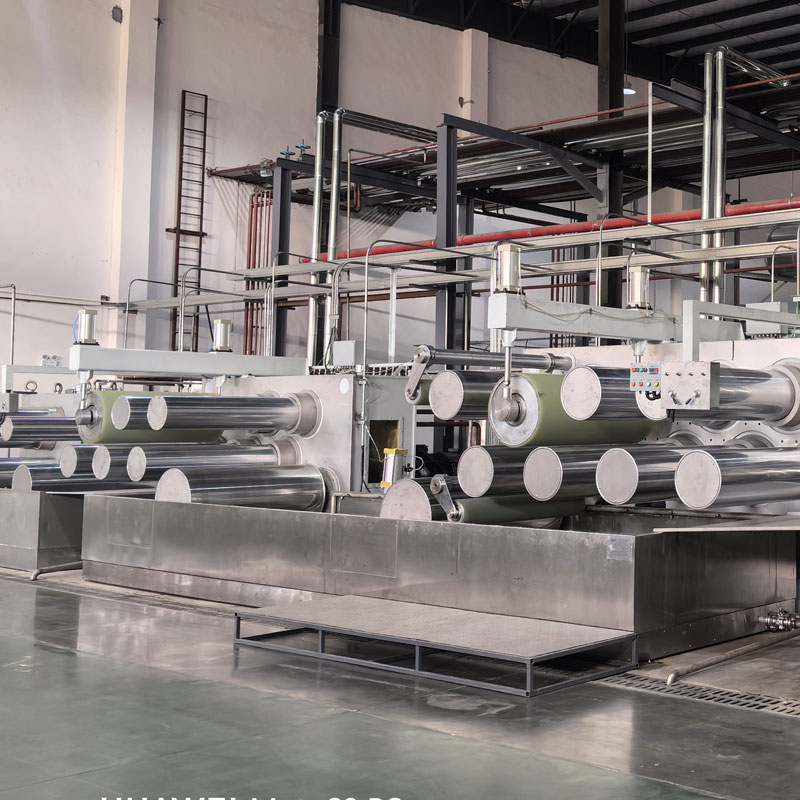
 Controlled roller stages help maintain a repeatable drawing history for polyester fiber.
Convert Process Data Into a Practical Quality Loop
Reliable making polyester fiber combines in-process discipline with outcome testing. A workable control plan commonly links input checks, machine-condition observations, online trends, laboratory tests, and disposition rules. The exact list is site-specific, but it should identify who reviews each result, what constitutes a meaningful trend, and what action is permitted when the result moves toward a limit.
- Input verification: confirm material identity, agreed blend condition, and relevant preparation records.
- Process verification: review melt, pressure, cooling, drawing, and thermal-treatment trends against the validated window.
- Output verification: test the agreed fiber quality control characteristics using defined methods and sampling plans.
- Change control: document trials, distinguish temporary adjustments from approved settings, and compare results before releasing a new condition.
This approach makes deviations easier to investigate. If tenacity, elongation, fineness, or shrinkage drifts, a team can trace the sequence from the sample back through production parameters and material records. It also helps avoid overreacting to a single reading that may not represent the full lot.
Design Sampling Around Decisions, Not Around Habit
For making polyester fiber, samples should answer a specific decision: continue running, adjust within an approved range, hold material, or escalate for engineering review. Sampling only at the end of a campaign may detect a problem too late. Sampling without a defined action path creates data without control. The right plan considers where variation is most likely to emerge, how quickly a test result is available, and how a result relates to the final textile materials application.
What information would your team need to confirm before comparing two process conditions? At minimum, compare the same target specification, input condition, test method, and relevant line history. Otherwise, apparent gains in one property may be caused by a different baseline or an unrecorded process change.
Keep the Process Window Specific to the Product
It is tempting to ask for a single set of settings for making polyester fiber. A more useful question is which validated window fits a defined polymer, fiber grade, machine configuration, and application target. The answer may differ between finer and coarser products, between different feedstock conditions, and between fibers requiring different downstream behavior. Site-specific engineering confirmation is essential before adopting any new setting or configuration.
In short, making polyester fiber is a specification-to-process exercise. Start with the performance the textile materials must deliver, connect that goal to controllable stages, then confirm the result through repeatable testing and documented change control. After reviewing the process, return to the original question: does the chosen window demonstrate the required polyester characteristics consistently enough for the intended application?


 Hot News