EN
Fiber Making Machine Maintenance Tips for Long-Term Operation
A fiber line earns its keep through stable running, not through a single impressive startup. For the maintenance lead, the useful question is not simply whether a fiber making machine is running today. It is whether the line is clean, aligned, lubricated, documented, and safe to restart tomorrow. A practical routine gives operators a shared way to spot small changes before they turn into lost production time or inconsistent fiber output.
This guide frames machine maintenance as part of normal production control. Begin each task with the equipment manual, your site’s safety rules, and the specific process requirements for the material being run. Settings, lubricant types, inspection intervals, and safe access points vary by line configuration.
Build maintenance around the process, not a calendar alone
A calendar matters, but a fiber making machine also gives operating signals between scheduled checks. Shift teams should record material changes, temperature or pressure drift, vibration, unusual noise, web or tow appearance, waste rate, and repeat alarms. Those observations make a planned service interval more useful because the team can compare today’s condition with the line’s normal behavior.
Divide the route into accessible zones: material feed and drying, extrusion and filtration where installed, spinning or forming components, cooling and drawing sections, winding or collection equipment, drives, and utilities. For each zone, define what the operator observes, what a trained maintainer checks, and what requires an approved shutdown. This prevents routine operator care from becoming unplanned invasive work.
Start every task with safe energy control
Cleaning, lubrication, clearing a jam, adjustment, and tool changes can expose people to unexpected movement or stored energy. OSHA’s hazardous-energy standard, 29 CFR 1910.147, identifies these activities as servicing or maintenance when that exposure exists. Follow the energy-control procedure required at your facility: isolate relevant electrical, pneumatic, hydraulic, thermal, and mechanical energy; release or restrain stored energy; and verify the equipment is in a safe condition before work begins.
Do not turn a rushed production recovery into an informal maintenance shortcut. Guards and interlocks should be restored and the work area checked before restart. Where local rules require lockout/tagout, only authorized personnel should apply and remove devices. The machine manual and site risk assessment govern the exact method.
Use a shift-level inspection that catches ordinary problems early
A short, repeatable walkaround supports production reliability without stopping the line unnecessarily. It should focus on changes rather than guesses:
- Look for fiber accumulation, material leaks, loose fasteners, damaged insulation, and signs of rubbing around accessible guards and covers.
- Listen for a new rattle, bearing noise, belt noise, or irregular drive sound; record the location and operating condition rather than diagnosing from sound alone.
- Check that cooling-water, compressed-air, and vacuum indicators are within the site’s normal operating window.
- Confirm that alarms, sensors, guarding, and emergency-stop hardware are visible, intact, and handled according to the approved test plan.
- Review product appearance with the production team. A change in fiber uniformity can be a process issue, a material issue, or an early mechanical clue.
The most useful inspection form has a place for “normal,” “watch,” and “action required.” A note such as “slight buildup near collection guide after grade change” is more actionable than a generic tick mark.
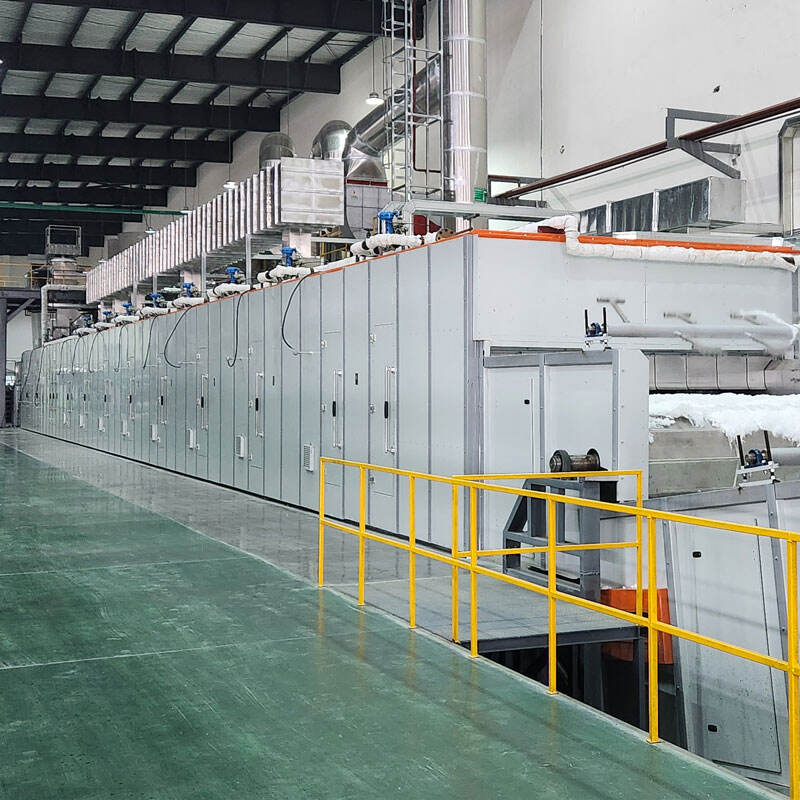 Planned inspection supports informed maintenance decisions.
Clean in a way that protects critical surfaces
Fiber residue, dust, and degraded material can interfere with airflow, cooling, sensing, and product handling. Schedule cleaning by contamination risk, not by appearance alone. In a fiber making machine, areas near feed paths, guides, filters, quench or cooling sections, rollers, and collection points may need different methods.
Use only approved tools and cleaning materials. Avoid scraping, solvents, compressed-air practices, or water exposure that conflict with the OEM instructions or site safety procedure. Before cleaning a sensitive component, clarify whether residue indicates a normal housekeeping need or a process problem that needs engineering review. This distinction is central to effective fiber equipment service: cleaning should reveal condition, not hide a recurring fault.
Lubricate by specification and record what was done
Lubrication is not a “more is better” task. The wrong lubricant, a contaminated grease point, or over-application can create heat, attract debris, or affect adjacent components. Build a lubrication map from the manufacturer’s documentation. It should identify each point, approved lubricant, quantity or method, interval, access condition, and person responsible.
Before applying lubricant, clean the fitting area where appropriate and inspect for damage or leakage. If a bearing or gearbox requires attention more often than the documented plan, treat that as a condition signal. Escalate it rather than compensating indefinitely with extra lubricant. Keeping this record supports both machine maintenance and a more informed discussion during planned downtime.
Plan deeper checks during controlled downtime
Some checks are safer and more meaningful when the line is stopped and isolated. A planned maintenance window can include inspection of drive transmission condition, alignment indicators, roller or guide wear, fastener condition, cable routing, heater connections where applicable, and accessible seals or hoses. Compare findings with OEM limits and your approved maintenance plan instead of assigning universal replacement intervals.
Use the downtime plan to review parts readiness as well. Identify critical consumables and wear items from the equipment documentation, confirm their part numbers, and verify storage conditions. This is a sensible approach to machinery operation because it reduces last-minute substitution decisions without assuming that every item should be replaced at the same frequency.
Turn records into reliability decisions
A maintenance log should connect the observation, action, and result. Include date and shift, equipment zone, operating condition, symptom, safety isolation status where applicable, work performed, parts or lubricant used, person responsible, and restart result. Add a follow-up date for any “watch” item.
Review the log regularly with production and maintenance personnel. Repeated cleaning in one area, recurring tension adjustments, or the same alarm after a material change may point to a cross-functional issue rather than an isolated repair. That review is what converts individual machinery operation notes into a more reliable service plan.
When to escalate instead of continuing to run
Stop and follow site escalation procedures when a condition involves damaged guarding, exposed electrical components, a suspected leak of hazardous material, an overheating component, abnormal vibration that is increasing, loss of safety function, or a fault that the approved procedure does not address. For less urgent changes, use the recorded trend and your site’s response criteria to determine whether the next planned window is appropriate.
A disciplined fiber equipment service program does not promise zero interruptions. It gives the team a clearer basis for deciding what can be monitored, what needs repair, and what requires an immediate safe shutdown.
A simple maintenance rhythm for long-term operation
For a fiber making machine, long-term care is a cycle: observe during production, clean and inspect using safe access, lubricate only to specification, document deviations, and use planned downtime for deeper checks. Train operators to report changes early and give maintainers enough context to act on those reports. With that rhythm, maintenance becomes a controlled part of production planning rather than a response to the last fault.


 Hot News