EN
How Recycled Fiber Helps Reduce Textile Waste
Recycled fiber gives discarded textiles and other recovered materials another possible route through the economy instead of treating every item as a final waste stream. It is not a single material or a universal environmental answer. A useful recycled fiber program connects collection, sorting, material identification, conversion, quality checks, and a realistic end use. When those links are visible, textile waste management becomes less about a broad claim and more about practical decisions that keep suitable material in circulation.
For teams planning recycled PET or textile-to-textile projects, the starting point is usually the incoming material. A recycling-process analyst would separate feedstock variability from equipment capability: a line can be designed around a material route, but it cannot make mixed, contaminated, or poorly documented input behave as though it were uniform. That distinction matters when recycled fiber is discussed in sustainable fashion, industrial textiles, nonwovens, or other applications.
What recycled fiber means in a waste-management system
At its simplest, recycled fiber is fiber made from recovered feedstock rather than solely from virgin raw material. The feedstock can include pre-consumer production offcuts, post-consumer textiles, recovered polyester bottles, or other suitable recycled materials. The route may be mechanical, where material is sorted, opened, shredded, cleaned, and reprocessed, or chemical, where a suitable polymer stream is processed through a different recovery pathway. The right description depends on the material, the process, and the evidence available for that specific supply chain.
The U.S. Environmental Protection Agency reported that 2.5 million tons of textiles were recycled in the United States in 2018, equal to a 14.7% recycling rate for all textiles in municipal solid waste. The figure is a dated U.S. reference, not a global performance claim, but it shows why recycled fiber is relevant to textile waste management: a substantial share of textile material still requires a better route than disposal.
Recycled fiber helps only after the material is captured and directed into an appropriate path. Reuse may be preferable for durable garments in usable condition. Remanufacturing can retain fabric value in some cases. Fiber recovery becomes relevant when the material is no longer suitable for those routes but can still serve a defined downstream application. A circular economy works through these decisions in sequence rather than assuming that every collected textile should undergo the same process.
Why sorting determines what can happen next
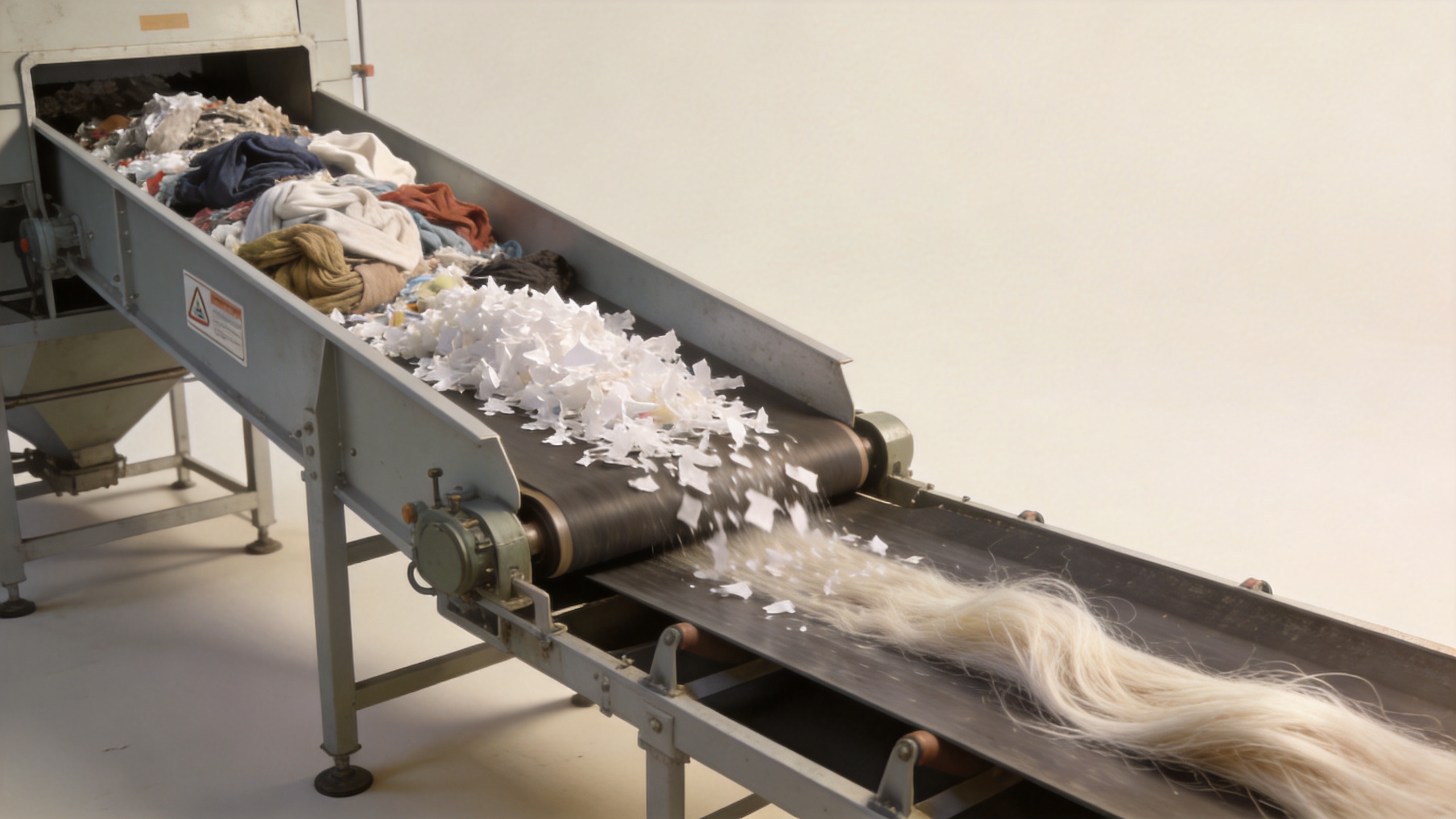
Sorting is the bridge between collection and recycled fiber production. It can separate material by composition, color, construction, condition, and contamination risk. That information influences whether a batch can be reused, mechanically processed, directed toward a chemical route, or removed from a proposed stream. In practical terms, textile waste management needs enough material knowledge to avoid mixing incompatible inputs into a single promise.
Blended fabrics make this harder. The European Environment Agency has noted that separately collected textiles are sorted for reuse, recycling, or disposal according to quality and material composition. Its cited European analysis also indicates that almost one third of textile waste may be unsuitable for fiber-to-fiber recycling. This is not a reason to dismiss recycled fiber; it is a reason to define the feedstock and the intended route before making an output claim.
A common mistake is to treat all recovered input as interchangeable. One batch may contain a relatively consistent polyester stream; another may include blends, finishes, dyes, moisture, labels, or unknown contaminants. Each condition changes the questions for recycled fiber processing. Clear incoming-material specifications, sampling methods, and records can therefore be as important as the conversion equipment itself.
How recycled fiber can support a circular economy
In a circular economy, materials remain useful for longer through reuse, repair, remanufacture, recycling, and carefully chosen end uses. Recycled fiber contributes by creating a route for material that has reached the end of its original use but still has recoverable value. It can help connect waste collection with new textile applications, provided the material route is technically and commercially suitable.
The value is not simply that a product contains recycled fiber. The stronger question is whether the project can show what material entered the process, how it was handled, which conversion route was used, and what output requirements were checked. Recycled-material language is more credible when it names what is being verified instead of making a broad environmental conclusion.
For example, a producer considering recycled PET feedstock may need to review material preparation, contamination controls, melt processing, spinning conditions, fiber handling, and output evaluation as connected interfaces. A material-flow discussion can also include the planning questions around utilities, controls, documentation, and site conditions. Soft Gem’s stated recycled bottle-to-fiber planning context can be a starting point for a project discussion, subject to project-specific technical confirmation; it should not be treated as proof of a particular result.
Where recycled fiber fits in sustainable fashion
Sustainable fashion often brings recycled fiber into the conversation because brands and manufacturers want alternatives to a linear take-make-dispose model. Yet the useful conversation goes beyond a label. Designers can consider fiber composition, trim choices, dyeing, durability, repair, sorting compatibility, and the likely recovery route at the end of use. These choices can influence whether future textile waste management is straightforward or difficult.
Recycled fiber can be one input among several in a product strategy. Its suitability depends on the target performance, appearance, processing method, available feedstock, and evidence requirements. A lower-impact conclusion cannot be assumed from the term alone. Instead, teams should request the documentation needed to support a specific recycled-content or chain-of-custody statement.
Voluntary tools such as the Recycled Claim Standard and Global Recycled Standard are often discussed in this context because they address third-party certification of recycled input and chain of custody. They are possible verification frameworks, not certifications that should be attributed to a manufacturer, product, or project without records.
A practical checklist for responsible recycled fiber planning
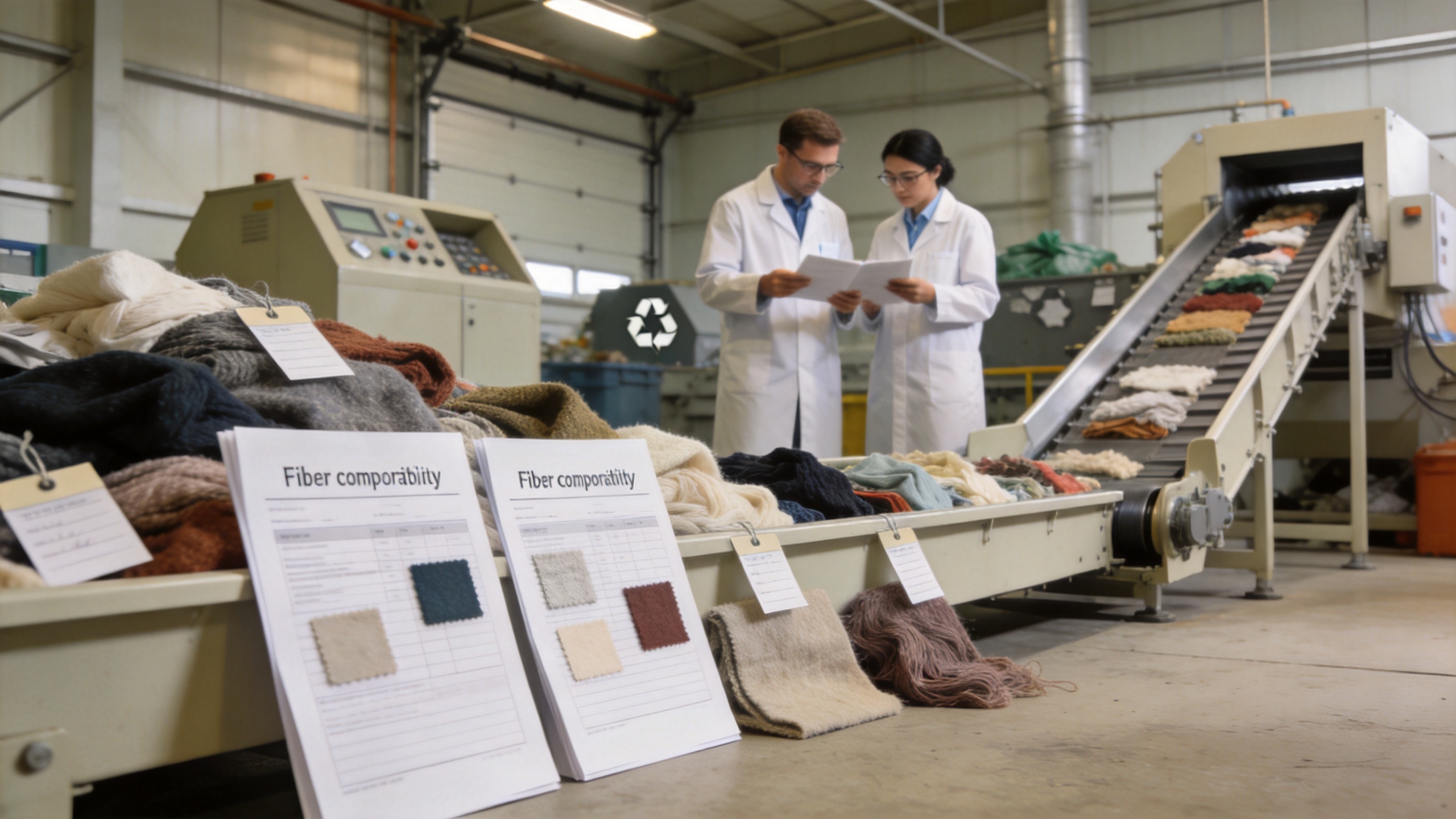
- Define the input: Is the proposed feedstock pre-consumer, post-consumer, bottle-derived, textile-derived, or a blend of streams?
- Map the sorting rules: Which compositions, contaminants, colors, finishes, and moisture conditions require separate handling?
- Choose the recovery route: Does the intended recycled fiber route match the material and the target application?
- Set output checks: Identify the fiber characteristics and test methods that need project-specific confirmation.
- Request traceability evidence: Clarify material records, chain-of-custody needs, and the scope of any recycled-content statement.
- Keep the system boundary visible: Review preparation, conversion, handling, controls, utilities, and end-use requirements together.
Turning recovered materials into a credible next step
Recycled fiber does not remove the need to reduce waste at the source, improve collection, or design for longer use. It does, however, give suitable recovered materials a route back into useful production when the feedstock, process, and verification path are aligned. That is why recycled fiber is most helpful when it is treated as part of a managed system rather than as a standalone marketing phrase.
For textile waste management teams, the next step is to document the material stream, define the intended application, and list the questions that still need evidence. A qualified recycled fiber plan can then support circular economy goals with clearer assumptions, more useful data requests, and a more responsible basis for decisions in sustainable fashion and industrial manufacturing.


 Hot News