EN
How Polyester Fiber Equipment Improves Production Stability
When teams discuss making polyester fiber, they often begin with a list of machines: an extruder, spin packs, a quench system, drawing equipment, cutters, and controls. That list matters, but it is not the whole stability question. For operators and project planners, making polyester fiber is stable only when material flow, heat, motion, measurement, and routine maintenance work together over time.
A line can reach a target output during a short trial yet remain difficult to run consistently. The more useful question is whether people can observe, adjust, and maintain the process after start-up. This article explains how equipment choices can support steadier making polyester fiber without treating any single feature as a guarantee.
Production Stability Is a System Outcome
In practical terms, stability means the line can hold an agreed operating window, reveal departures early, and recover in a controlled way. During making polyester fiber, a change in polymer condition, temperature, pressure, cooling, godet speed, or tension may influence what happens downstream. Melt spinning and subsequent drawing are widely recognized as important stages for fiber morphology, orientation, and properties. That is why a stable line is not simply a “good spinneret” or a “smart control cabinet.” It is a connected process.
At first this looks like a machine-selection issue; more precisely, it is a process-and-interface selection issue. A stated capacity does not by itself show that utilities, material handling, controls, and maintenance access are ready to support it. In a polyester staple fiber project, the interfaces deserve as much review as the headline throughput.
1. Controlled Material Preparation Reduces Upstream Variation
The first equipment contribution to stable making polyester fiber begins before the melt reaches the spinning position. Handling, drying, conveying, and feeding should be reviewed as one material-preparation path. If the input condition is not understood or is allowed to vary without visibility, operators may be forced to compensate later with settings that do not address the original cause.
For a production team, this means asking practical questions: What condition is measured at the handoff point? Where can material be held too long? How are alarms distinguished from routine variation? The answers are more valuable than a generic promise of “high efficiency.” Equipment optimization should make these conditions observable and make corrective action repeatable.
2. Thermal and Pressure Control Protect the Spinning Window
At the spinning stage, making polyester fiber depends on coordinated thermal and pressure behavior. Technical guidance on melt spinning consistently treats temperature stability as important because fluctuations can contribute to inconsistent processing. The equipment response should therefore be evaluated as a loop: sensing, control logic, heating or cooling response, and a clear operator action when the reading leaves its intended range.
That said, a display alone does not create production reliability. Teams should check sensor locations, the usefulness of trends, alarm priorities, and the accessibility of components that require cleaning or inspection. Instead of listing control features, ask which operating question each feature is intended to answer. Can the team identify a developing deviation before it becomes a break, a quality concern, or an extended cleaning event?
 Process monitoring and coordinated equipment interfaces are central to a stable fiber-production workflow.
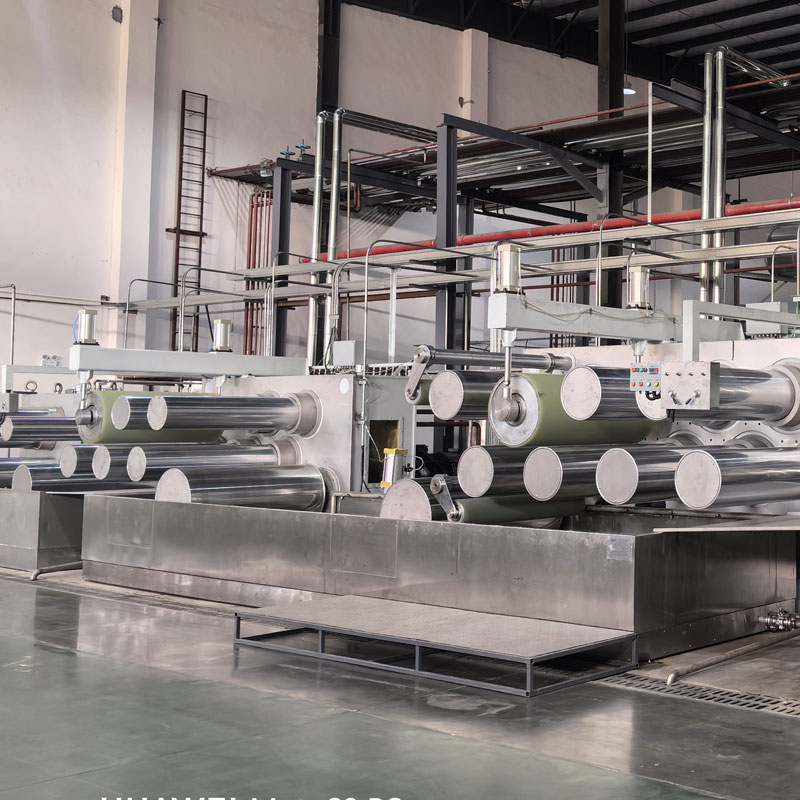
3. Balanced Quenching and Draw Control Support Consistency
After extrusion, the path through cooling, drawing, and relaxation continues to shape process behavior. For making polyester fiber, changes in cooling conditions or mechanical handling can affect the continuity of the line and the consistency of downstream treatment. The appropriate configuration depends on the intended fiber specification, site conditions, and validated process package, so no universal setting should be assumed.
Equipment planning is stronger when it maps dependencies rather than isolates modules. For example, quench conditions, filament path, draw-roll condition, speed coordination, and tension monitoring should be reviewed together. Fiber machinery performance becomes easier to improve when the responsible team can trace an observed issue across those interfaces instead of changing one setting repeatedly without a diagnosis.
4. Automation Helps Only When It Produces Usable Decisions
Automation can make making polyester fiber more repeatable by collecting signals, applying defined interlocks, and preserving operating history. Yet the practical value is not the quantity of data. It is whether the data supports timely decisions at the line. An effective control arrangement separates normal drift, an actionable warning, and a condition requiring a safe response.
This aligns with the general ISO 9001 process-approach principle of monitoring and measuring processes against planned objectives. It does not imply that a particular line or supplier holds ISO certification. Rather, it offers a useful discipline: define what stable operation looks like, decide how it will be measured, and review whether the process is meeting that objective.
When assessing industrial solutions, request a discussion of what signals are visible to operators, what records are retained, and how exceptions are handled. A stated digital-information capability can be a useful engineering discussion point, but it should be verified against the project scope, control architecture, and handover requirements.
5. Maintenance-Ready Design Prevents Small Issues from Becoming Stops
Production reliability is also shaped by what happens between planned runs. For making polyester fiber, routine tasks such as cleaning, inspection, lubrication, roll changes, filter attention, and access to wear components can affect how long minor issues remain minor. A technically capable module that is difficult to inspect or service may create unnecessary recovery time.
Maintenance planning should therefore be part of equipment optimization, not an appendix after procurement. Ask where technicians need safe access, which parts need an agreed spare-parts plan, and what operating records help distinguish wear from a process-related cause. This translates design into routine work and keeps the discussion focused on observable conditions rather than unverified uptime claims.
6. Commissioning Builds the Baseline for Stable Operation
The final stability benefit comes from commissioning discipline. Before declaring that a line is ready for continuous making polyester fiber, teams should document intended operating ranges, acceptance observations, alarm behavior, handover responsibilities, and the boundary between normal adjustment and escalation. Define trials before interpreting them: clarify which variable a trial is meant to isolate and what evidence would support a conclusion.
This approach also helps different stakeholders work from the same picture. Engineering can review interfaces, operations can review routines, quality can review the measurement plan, and procurement can confirm the agreed scope. For complex fiber projects, a whole-project planning conversation may help organize these questions, subject to project-specific engineering confirmation.
A Practical Review Checklist
- Does the proposed line show how material condition is monitored before melting?
- Can the team trace thermal, pressure, speed, and tension signals across key interfaces?
- Are alarms prioritized with clear actions rather than treated as a long undifferentiated list?
- Is routine maintenance access considered alongside production layout and safety needs?
- Will commissioning establish documented operating windows and exception-response rules?
- What technical documentation, trials, or process-package review is needed before any stability expectation is accepted?
Conclusion
Better equipment supports stable making polyester fiber when it makes the process easier to observe, control, maintain, and validate. The strongest decision is rarely a feature-first choice. It is a system review that connects target fiber requirements with material preparation, spinning control, mechanical handling, automation, maintenance, and commissioning. If a project begins with those dependencies, production stability becomes a structured engineering objective rather than a vague promise.


 Hot News